Restoring a water mill: water rights, the stages, the costs
The mill race is dry, the wheel has not turned for years, and yet the water right still exists. That is the first surprise for anyone buying a mill: stone is inherited, but water is administered.
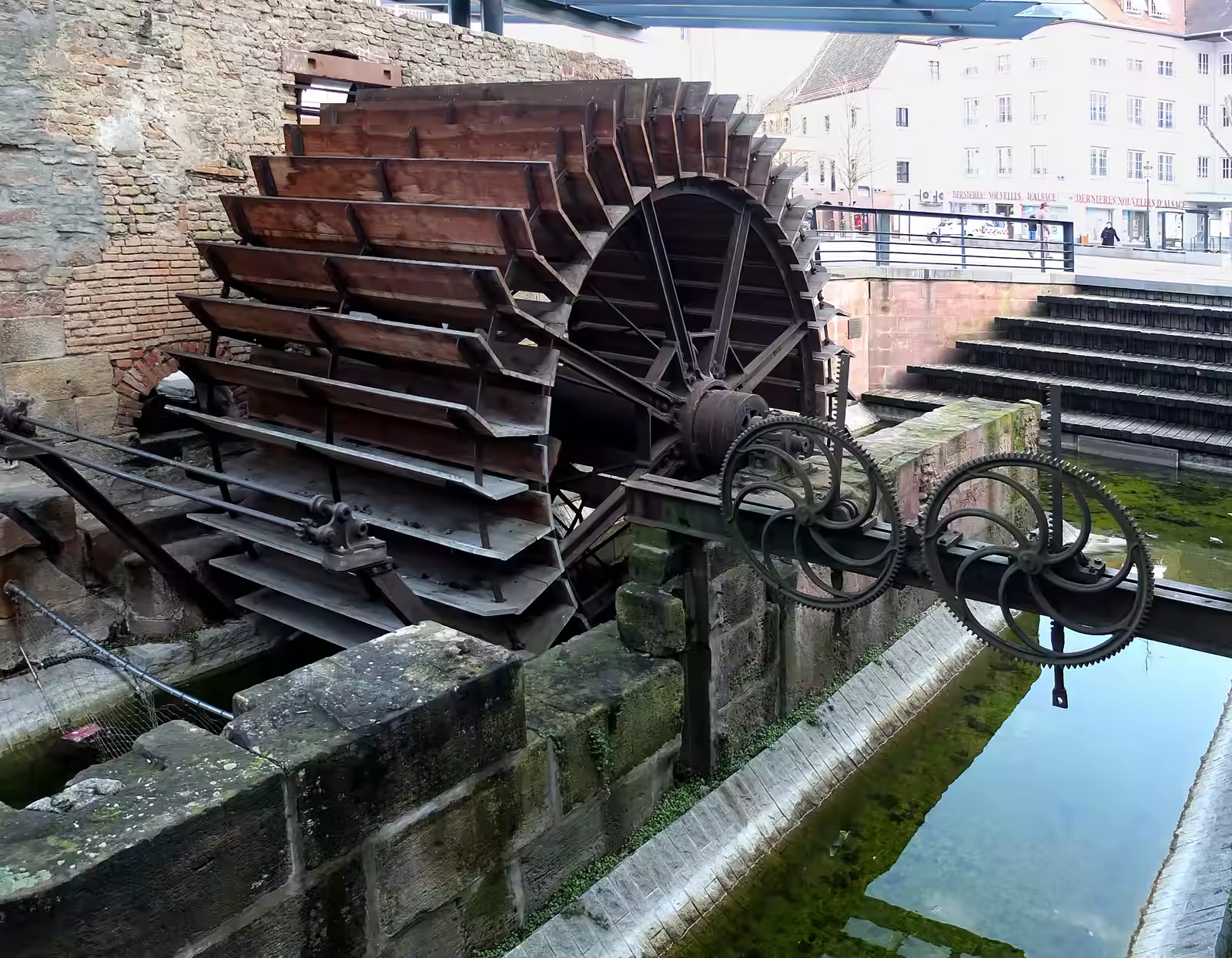
Photo: Palauenc05 — Wikimedia Commons, CC BY-SA 4.0.
The water right, before anything else
Before talking plaster and roof timbers, talk paperwork. The water right is a real property right: it does not follow the person, it follows the building. Sold with the mill, it passes to the buyer, unless otherwise stated. Buying an old mill does not lose you the water right — but neglecting it can let it lapse.
Two regimes divide French mills. The right established by title concerns structures that predate the Revolution: it is presumed as soon as the mill existed before 1789, and it is exempt from the authorisations and renewals introduced by the 1919 law on hydraulic power. The right founded on a deed rests on an official document — a water regulation, a prefectoral order, a royal ordinance. The proof is sought in the departmental archives, and it is for the owner to provide it to the administration.
Putting the water back to the mill
For a mill established by title, the good news fits in one sentence: the re-activation of the old water right is possible. This avoids the long and costly process of a brand-new environmental authorisation. In practice, the first visit is not to the roofer but to the archives, then to the departmental territories directorate, to establish which water right the mill falls under.
The stages, from the roof to the wheel
A restoration follows an order that leaves no room for improvisation. First the preliminary study, with an architect or project manager who knows listed buildings: they say what still holds and what no longer does. Then the structural work — masonry, roof framing, covering — before turning to what makes the heart of the place beat: the wheel, the race, the sluices, the mechanism. You do not put water back into a building that leaks.
What it costs
The figures are to be handled carefully, so different are the situations: a roof alone has nothing in common with a full restoration, and the price depends on the building, the region and the level of protection. The cost items are always the same — studies, structural work, interior work, hydraulic mechanics. Before believing a range read online, better to ask the heritage associations: they know the real costs, region by region, and often the craftsmen who charge them.
The restored mill, and then?
Few restore a mill for the pleasure of the wheel alone. More often the building comes back to life as a home, a workshop or a gîte — the path we follow in our feature on mills turned into gîtes. The wheel turning again is only the first step: from millstone to table, a restored mill is a place that starts welcoming people again.
Sources
Frequently asked questions
What is a mill's water right?
It is a real property right allowing the use of the water's motive force. It is attached to the mill, not to its owner, and passes with it on sale.
What is the difference between a right established by title and one founded on a deed?
Established by title: the mill and its water right predate the French Revolution (1789) and are exempt from authorisation. Founded on a deed: use rests on an official document, such as a water regulation or a prefectoral order.
Can an old mill be put back into service?
Yes. Re-activating an old water right avoids long and costly procedures: it is often the first thing to check before buying.